Post by : Anis
Al-Rashid
A Pivotal Diplomatic Engagement for India and the EU
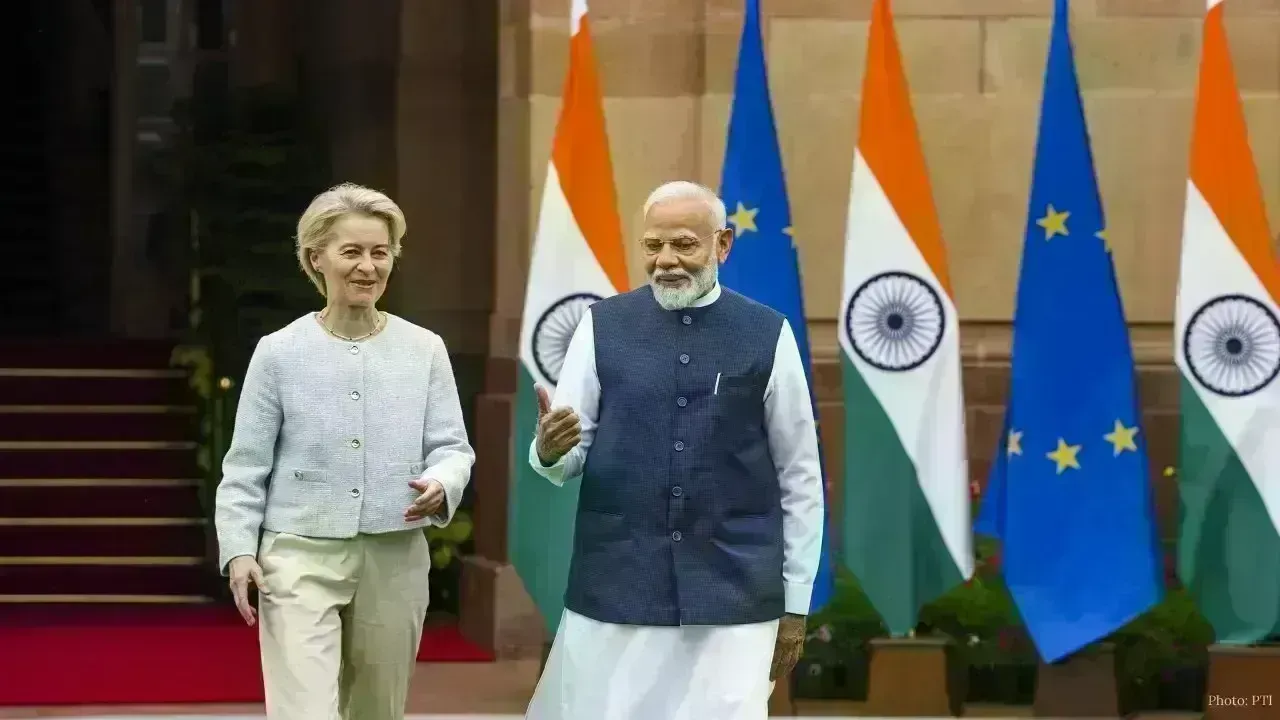
India is gearing up for a notable visit from leading officials of the European Union, including European Council President António Luis Santos da Costa and European Commission President Ursula von der Leyen, who will take on the role of chief guests during the Republic Day celebrations on January 26, 2026.
Beyond this ceremonial participation lies a strategically vital diplomatic agenda—the 16th India-EU Summit set for January 27, 2026, where the long-anticipated India-EU Free Trade Agreement (FTA) may be finalized and officially declared.
This visit is not just ceremonial; it could represent a significant milestone in economic relations between India and the EU, moving towards a formal agreement that has been under negotiation for almost two decades.
The Journey to Trade Completion
Initial Talks and Delays
The discussions for a comprehensive free trade agreement between India and the EU began in 2007, but faced significant delays due to issues surrounding market access, tariffs, regulatory challenges, and sensitive sectors, such as agriculture and automobiles.
Following a lengthy pause, negotiations were revived in 2022, driven by rapid shifts in the global economy, protectionist tendencies, and geopolitical uncertainties. The parties are eager to converge their markets and reduce reliance on singular trading partners amid rising global trade fragmentation.
Renewed Efforts and Latest Developments
Negotiations have picked up speed over the last year. Officials have indicated that most components of the agreement are near completion, with only a few disagreements left to address. Indian Commerce Secretary Rajesh Agrawal stated that both sides are “very close” to finishing the pact, with teams currently working to resolve outstanding issues ahead of the summit.
German Chancellor Friedrich Merz—whose recent trip to India underscored the importance of economic and security collaboration—suggested that the deal might be finalized by the end of January, paving the way for its formal announcement during the visit of EU leaders.
The increased urgency signifies both political commitment and strategic alignment, suggesting the India-EU FTA could be one of India’s most significant trade agreements yet.
Diplomatic Setting: EU Leaders at India’s Republic Day
A Unique Diplomatic Attendance
In a historical first, leaders from the European Union as a collective—not merely individual heads—will attend India’s Republic Day celebrations, highlighting the robust ties between India and the EU.
The selection of the chief guest for Republic Day has historically mirrored India’s diplomatic priorities and strategic alliances. In this context, it affirms the EU's crucial role as a strategic and economic partner.
During their state visit from January 25-27, the EU leaders will engage in ceremonial functions, bilateral discussions with Indian officials, and participate in an India-EU Business Forum aimed at bolstering commercial relationships and investment collaboration.
Exploring the India-EU Free Trade Agreement
Objectives and Scope
The prospective India-EU Free Trade Agreement (FTA) aims to lower tariffs and non-tariff barriers, improve market access for various goods and services, guarantee investment protection, and foster regulatory cooperation between India and the 27-member bloc, which includes major economies like France, Germany, Italy, and Spain.
Commerce and Industry Minister Piyush Goyal has described the deal as the “mother of all deals,” underscoring its potential to greatly augment economic activities and trade.
This strategy for trade liberalization would entail both parties committing to comprehensive agreements across diverse economic domains—from industrial goods and textiles to services and investments, potentially including delicate sectors.
Key Economic Considerations and Negotiation Challenges
While considerable progress has been made, certain sensitive sectors necessitate delicate negotiations. The EU has requested reduced import tariffs on automobiles—where customs duties in India can surpass 100%—as well as greater access for items like medical equipment, wine, and spirits. Conversely, India is cautious about fully liberalizing areas such as agriculture and dairy, which hold significant political and economic importance.
Other contentious points include regulatory standards, origin rules, and carbon adjustment mechanisms, particularly in industries like steel, where India is concerned about impacts from European environmental regulations.
The emphasis remains on achieving a balanced agreement that enhances trade while safeguarding the economic interests of both parties, and there is optimism that remaining disagreements can be settled by the summit.
Strategic and Geopolitical Consequences
Indo-EU Strategic Alignment Beyond Trade
The relationship between India and the EU transcends economic cooperation, extending into strategic domains including technology, clean energy, defense collaboration, and connectivity. The FTA is part of a larger agenda that aims to align economic interests with shared geopolitical values—including support for a rules-based international system and diversifying trading partnerships away from singular dependencies.
Experts recognize India's increasing economic and diplomatic prominence as vital to Europe’s strategic aspirations within the Indo-Pacific region, providing the EU with an essential ally amid global unpredictability and changing geopolitical landscapes.
A Message to the Global Marketplace
The potential forging of the India-EU FTA bears wide-ranging implications for global trade dynamics. For the EU, improved market access to India—a rapidly expanding market of over 1.4 billion people—enhances economic diversification and safeguards against protectionistic trends and supply chain interruptions.
For India, the agreement would amplify integration with advanced global supply chains, potentially boosting sectors such as textiles, pharmaceuticals, and technology services, while fostering increased investor confidence that could drive sustainable economic growth.
These dynamics may reshape trade between two of the world’s largest economies, influencing negotiations and partnerships across the globe.
Economic Effects and Market Response
Projected Benefits for Indian Industries
Upon finalization, the FTA is expected to offer better market access for Indian goods in the European market—currently India’s foremost trading partner. Anticipated reductions in tariffs and streamlined regulations could enhance the competitiveness of Indian exports in Europe.
Sectors poised to gain include textiles, pharmaceuticals, leather products, machinery, and chemicals. Decreased tariff barriers within the EU could lead to increased demand, improved economies of scale, and enhanced foreign exchange revenues.
Growth, Employment, and Investment Opportunities
Heightened trade engagement could unlock significant investment prospects, spur job creation, and stimulate growth in sectors aligned with global demand. European companies may augment investments in India, incentivized by improved market access and reinforced protections under the agreement.
Conversely, India must navigate the potential increase in competition in certain delicate sectors, ensuring domestic economic priorities are met—a complex aspect of ongoing negotiations.
Political and Policy Imperatives
Balancing Domestic Interests with Trade Policy
For India, advancing trade policy requires careful consideration of domestic priorities while striving for international integration. Protecting livelihoods in vital sectors like agriculture and small-scale manufacturing remains crucial, influencing tariff negotiations and market access provisions.
Similarly, Europe must weigh the interests of its member economies and industries—particularly those sensitive to import competition—while pursuing broader strategic objectives in collaboration with India.
Next Steps: The Summit and Future Prospects
The India-EU Summit on January 27, 2026 is anticipated to serve as a forum where the free trade agreement may be officially revealed or highlighted, despite some technical legalities being concluded later.
This summit—following closely after India’s Republic Day celebrations—reinforces the political significance and strategic depth of the India-EU partnership. As chief guests at the Republic Day parade, European leaders will underscore shared values of democracy and economic collaboration, highlighting the comprehensive nature of the partnership.
Looking ahead, this agreement may open doors for collaboration in areas such as digital commerce, climate technologies, and defense sectors—extending the breadth of India-EU relations beyond mere economic ties.
Conclusion: A Defining Moment for India-EU Relations
The upcoming visit of senior EU officials to India for Republic Day and the subsequent India-EU Summit denotes a historic diplomatic and economic milestone. With the free trade agreement on the cusp of completion, the partnership between India and the EU is poised for a substantial leap forward.
Once finalized, this agreement will rank among India’s most crucial trade accords, transforming economic relations with a bloc of 27 developed nations, facilitating trade flows, investment, and strategic cooperation. As both sides gear up for the summit, it is evident: the India-EU trade deal represents not only an economic initiative but a demonstration of shared goals, mutual respect, and a fortified global partnership in an ever-evolving landscape.
Disclaimer:
This article is derived from current reports and analysis concerning India-EU trade negotiations and diplomatic updates. Trade talks are intricate and subject to ongoing discussions and political factors. Readers are encouraged to stay updated for official notifications regarding agreements.


 English