Post by : Anis
Al-Rashid
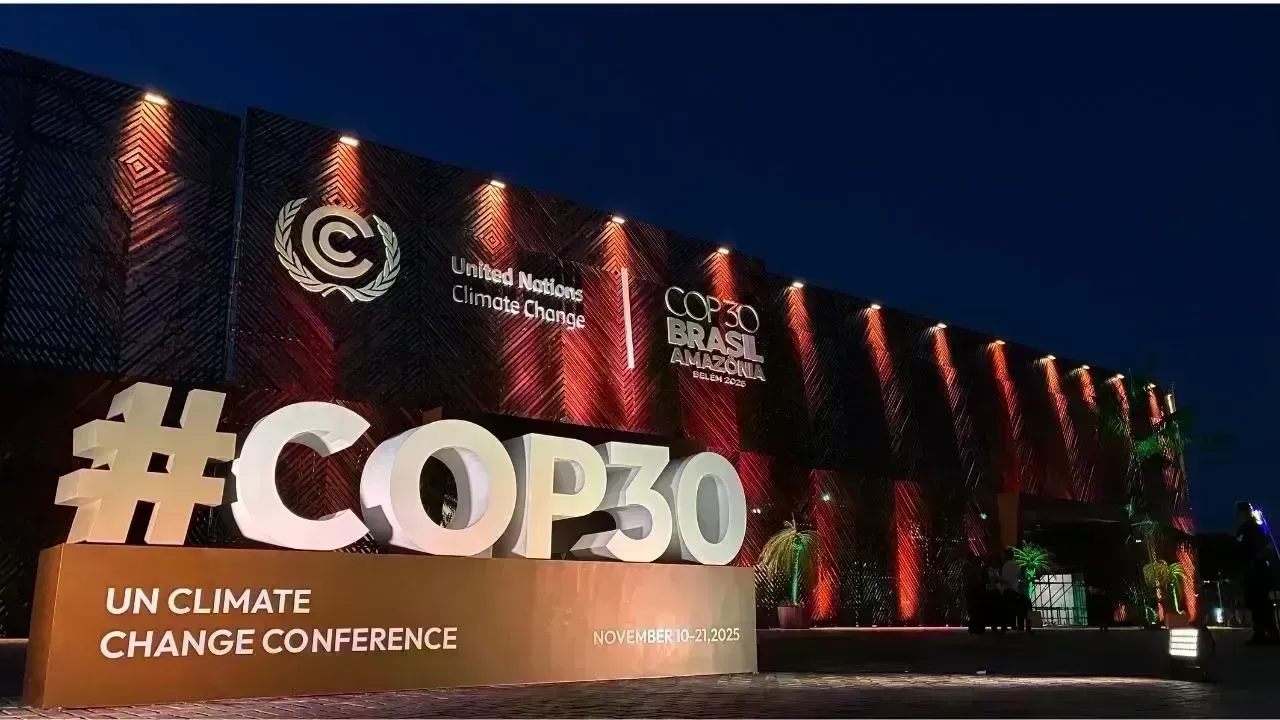
Photo: COP30
Global Attention on Climate Change
As the annual climate summit comes to a close, terms like “landmark,” “breakthrough” and “milestone” dominate the headlines. COP30 was no different. World leaders gathered with their teams, cameras captured every moment, and experts engaged in heated discussions through the night. For a brief period, the focus shifted towards critical global issues: ocean temperatures, forest fires, and air pollution.
Yet, for countless individuals facing extreme weather, economic instability, and food scarcity, the pressing query remains: what real benefits arise from such a conference?
For a farmer dealing with erratic rainfall, a family by the coast concerned about rising tides, an urban worker enduring heatwaves, or a monthly budget-hiker facing soaring utility bills, international agreements seem distant. Climate negotiations often feel like scripted performances, while daily existence feels like an uphill battle.
With COP30 behind us, it’s crucial to move past optimistic rhetoric and assess the genuine outcomes.
The Purpose Behind COP Gatherings
The Conference of the Parties, or COP, aims to unite governments in tackling climate change on a collective basis. The concept is straightforward but challenges abound: every nation must collaborate, as climate issues transcend borders.
Greenhouse emissions from one area influence climate across the globe. Regions that contribute minimally to pollution often bear the brunt of climate crises. Such injustice epitomizes the pressing need for COP discussions.
COP meetings were designed to tackle these discrepancies by:
Establishing binding commitments
Facilitating financial aid from wealthier nations to developing ones
Advancing clean technological initiatives
Encouraging cooperative efforts instead of rivalry
Each conference assures progress but often collides with harsh realities.
The Challenge of Real Implementation
The conclusions of COP30 included a variety of resolutions and agreements. While the paperwork may seem positive, the grim truth prevails: endorsing agreements is relatively simple. Rectifying economic structures, however, is a daunting task.
Formal commitments embody ambition, but without enforcement, they lose their weight.
Governments set future targets, pushing decisions into a distant timeline. Promises made for 2040 and beyond sound ambitious but only defer urgent choices. Coal operations persist, deforestation continues, and urban sprawl occurs without adequate planning.
At COP30, nations restated their commitment to emission cuts. Yet, reaffirmation differs starkly from action.
Finance: The Core Issue
Climate challenges involve more than just the ecosystem; they hinge heavily on financial resources.
Transitioning to clean energy necessitates capital, technology, and infrastructural support. Investments in solar power, electric transportation, and climate-resilient areas necessitate substantial funding.
The spotlight at COP30 fell on funding. Developing nations posed a crucial query: who will foot the bill?
Countries often hit hardest by climate events contributed the least to the crisis. They seek justice, not mere charity.
Yet, climate financing remains a contentious topic. Wealthy nations pledge funds, yet actual funding often lags behind formal announcements.
For communities faced with disasters, conference budgets hold little weight unless they translate into real support.
The Reality of Loss and Damage
One emotionally charged subject at COP30 was loss and damage—the acknowledgment that some consequences of climate change cannot be reversed.
When a settlement is submerged, a shoreline vanishes, or an ecosystem collapses, talk of “adaptation” loses its significance. Such losses require compensation and aid.
Despite existing frameworks, funding options for loss and damage are vague and inadequate. While agreements may exist, implementation often falters.
Those affected by climate change continue to await not sympathy, but survival.
Adaptation: An Overlooked Necessity
While emission reduction strategies garner significant focus, adaptation—helping communities manage unavoidable consequences—often takes a back seat.
Today, climate change revolves not only around preventing crises but also about learning to navigate them:
Cities resilient to flooding
Housing suitable for extreme heat
Agricultural methods that withstand climate variations
Enhanced water management systems
Coastal infrastructure
These are critical needs, not optional luxuries.
Though COP30 emphasized resilience, the pressing question lies in the speed of its implementation.
By the time strategies are drafted, natural disasters may have significantly impacted lives.
Familiar Phrases, Frustrating Reality
Every year, familiar slogans resonate:
These expressions, however, have lost their impact. Their overuse without tangible results breeds public skepticism.
People measure success not by declarations but by the realities they confront: rising utility costs, food scarcity, and water security.
The Corporate Climate Dilemma
The private sector holds a dual role in emissions and innovation. At COP30, businesses made pledges for green investments and sustainability.
However, they often operate on two fronts:
On stage: environmental pledges.
Off stage: ongoing ecological harm.
The term “green” has become fashionable. Yet, greenwashing persists, with companies claiming carbon neutrality while maintaining damaging practices.
Without stringent oversight, corporate commitments risk becoming superficial rather than transformative.
Engaged Youth, Established Structures
Young activists towards COP30 expressed frustration, urgency, and determination. Their voice echoed the reality: a hotter, unwelcoming world awaits them.
Yet, power remains predominantly with the older generation.
Youth may receive applause, but the systems remain unchanged.
This disparity shapes climate discussions: the future speaks, while the past holds the reins.
The Divide Between North and South
Climate negotiations often evolve into a subdued contest between growth aspirations and accountability.
Developing nations assert:
“We also deserve progress.”
Wealthier nations respond:
“The environment can’t support it.”
Both perspectives hold merit.
Yet, equity demands balancing aspirations with responsibilities.
COP30 did little to reconcile this ideological and political schism.
Energy Transition: A Slow Journey
Despite the promises of cleaner energy, fossil fuel dependence lingers.
Coal remains integral to economies, while profits from oil dominate dialogues. Natural gas continues to be dubbed a “transition fuel” long after the climate crisis has emerged.
The transition is underway but at a pace far too slow.
Energy shifts are not just technological but political.
Climate and Living Costs: An Overlap
Climate change significantly impacts inflation.
Droughts drive up food costs.
Storms damage essential structures.
Heatwaves elevate energy needs.
Floods disrupt supply chains.
Climate issues extend beyond environmental concerns and into household finances.
Yet, COP30 discussions often overlook the direct link between climate strategies and living expenses.
Communities seek solutions, not mere slogans.
Where COP30 Missed the Mark
COP30 faced challenges in:
Establishing enforceable deadlines
Assuring financial support
Instituting penalties for non-compliance
Clearly ending fossil fuel reliance
Delivering legal commitments
In essence, it upheld the tradition of negotiating without tangible resolutions.
Where COP30 Did Achieve Progress
For balance, some positive strides were made:
Increased pledges for renewable investments
Numerous countries enhanced their climate strategies
Greater emphasis on adaptation measures
Continuation of loss and damage discussions
Recognition for climate education
However, progress without concrete implementation remains merely potential, not protective measures.
Public Trust is Eroding
Citizens are becoming increasingly skeptical.
Climate summits seem detached from:
Everyday experiences
Economic conditions
Employment concerns
Healthcare access
Housing challenges
When climate discussions fail to resonate with actual lived experiences, public engagement diminishes.
Visions for Genuine Progress
If COP meetings intended to incite genuine change, they would prioritize:
Immediate cuts in emissions
Mandatory climate financing regulations
Transparent funding mechanisms
Local adaptation initiatives
Transforming infrastructure
Support for job transitions
Real success in climate efforts must translate into tangible outcomes, not tokens.
The Mental Burden of Climate Discourse
Constant alarm without actionable solutions can drain public morale.
Fear alone cannot sustain motivation; realistic hope must emerge.
The Role of Individuals Amidst Challenges
Despite political gridlocks, individuals still have the power to effect change.
No single person can resolve climate change.
However, communities and collective pressure can lead to systemic change.
Is COP Still Relevant?
Despite shortcomings, ceasing global dialogues would only exacerbate issues.
The climate dilemma is far too substantial to abandon discussions.
However, COP requires reevaluating.
Fewer performative actions.
More actionable deadlines.
Enhancing accountability.
Final Insights: Declarations Alone Can’t Mitigate Climate Change
COP30 did not outright fail.
Nevertheless, it did not fully succeed either.
It continued the trend of becoming a “promise factory” for climate solutions.
The environment doesn’t respond to mere vows.
It adheres to the laws of physics.
Carbon emissions don’t engage in negotiations.
Oceans aren’t willing to yield compromises.
The planet won’t hold still.
Real progress transpires when policies manifest as initiatives, rhetoric translates into investment, and promises evolve into genuine action.
Until we witness that shift, COP meetings will keep churning out declarations.
And the planet will continue reacting with severe consequences.
Disclaimer
This content serves purely for informational purposes. It reflects interpretations of reported climate discussions and does not express official stance or agreed outcomes.


 English