Post by : Saif
Al-Najjar
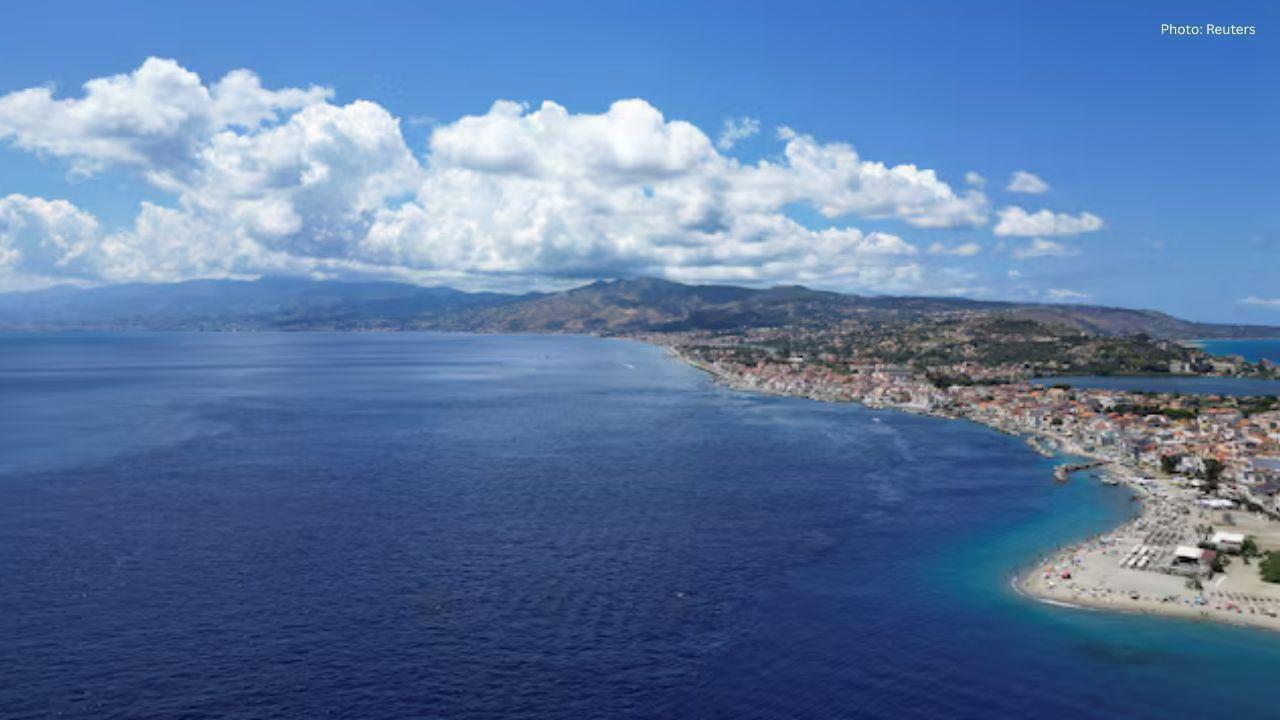
The planned suspension bridge linking Sicily to mainland Italy has been halted by an Italian court, which ruled that it infringes upon European Union environmental and tender regulations. In response, Prime Minister Giorgia Meloni’s administration has reiterated their commitment to the project, emphasizing its strategic and economic benefits.
Spanning 3,666 metres over the Strait of Messina, the bridge is proposed to be the world’s largest suspension bridge, surpassing the one currently in Turkey. Officials maintain that this infrastructure will stimulate economic growth in southern Italy, a region known for its historical underdevelopment, and aid the movement of NATO forces across the Mediterranean.
A comprehensive 33-page document from the Court of Auditors outlined that the government did not sufficiently justify proceeding with the project in light of environmental risks. The ruling pointed out possible negative impacts on coastal and marine ecosystems in both Sicily and Calabria. Additionally, the court criticized the absence of adequate technical documentation to validate the claimed “public interest” for the €13.5 billion ($15.65 billion) endeavor.
The court also raised concerns about rising costs and significant financial changes since the initial 2005 plan, indicating that these increases—making the project more than three times its original cost—might necessitate a new public tender to adhere to EU fair bidding regulations.
The Eurolink consortium, which has been provisionally chosen to construct the bridge, includes Italy’s Webuild, Spanish company Sacyr, and Japan’s IHI group. They are tasked with navigating the intricate technical, financial, and logistical challenges that come with a large-scale project in a seismically active area.
While critics warn that the undertaking poses economic risks and environmental threats—given the seismic nature of the Strait of Messina—advocates believe the bridge could revolutionize southern Italy by enhancing tourism, trade, and development.
Infrastructure Minister Matteo Salvini, a key member of the far-right League party, stresses that the bridge is a national priority. The government intends to thoroughly analyze the court’s ruling, expressing confidence in finding “ample room for clarification” regarding the court’s concerns.
For over 50 years, debates over the Sicily bridge have showcased a persistent clash between developmental aspirations and environmental and regulatory concerns. As the government prepares to advance, the project will likely encounter further legal, technical, and political obstacles before construction can commence.
In closing, although the judiciary has temporarily halted the initiative, Italy’s government envisions the bridge as a representation of economic advancement and national strategy. The key question remains whether the project can legally and practically move forward in the years to come.


 English