Post by : Anis
Al-Rashid
2026: A Year of Auroras and Geomagnetic Storms
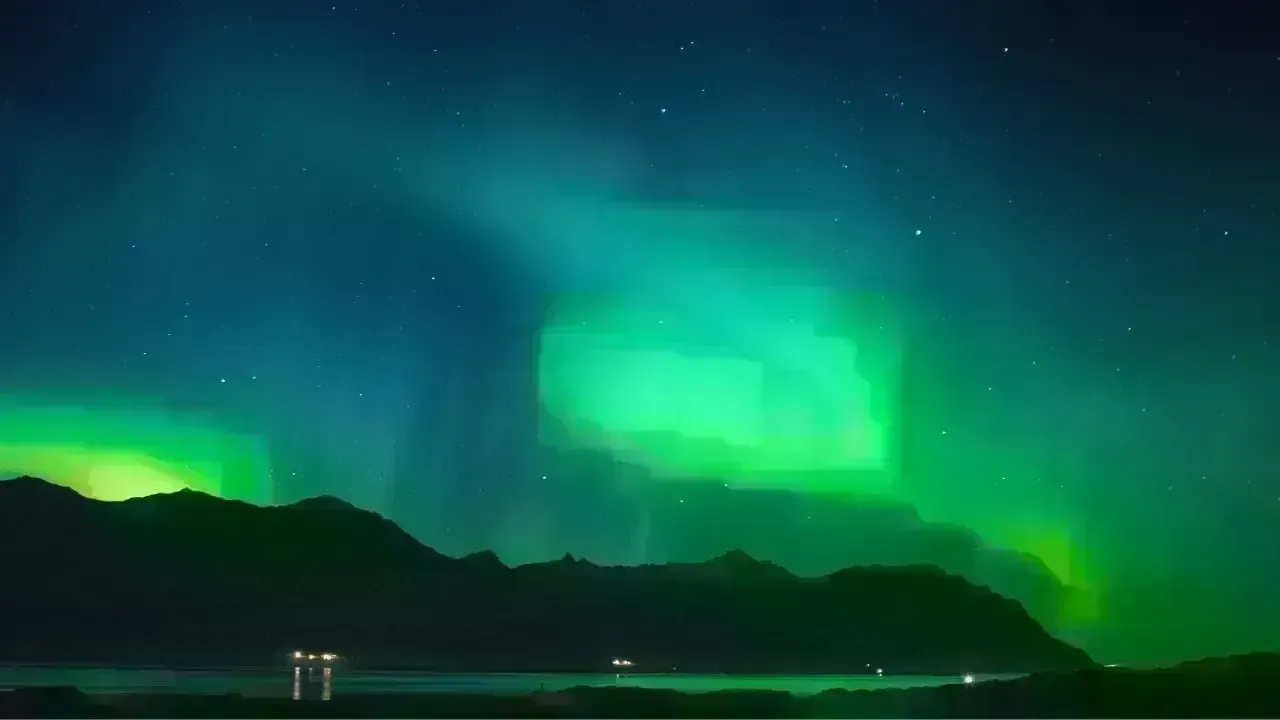
The allure of the night sky will intensify in 2026, with geomagnetic storms and auroras set to draw global gazes. This uptick in celestial phenomena is directly connected to the Sun's cyclical activity, as it nears a pivotal peak.
Events such as solar flares and coronal mass ejections will become more frequent, marking 2026 as a significant intersection of astrophysical occurrences and earthly impacts. While the beauty of auroras mesmerizes, it's essential to grasp the attendant risks posed by geomagnetic storms.
The Solar Activity Cycle Explained
Understanding the 11-Year Cycle
The Sun operates on an 11-year cycle, transitioning between periods of solar calm and maximum activity. At solar maximum, the Sun emits higher rates of sunspots, flares, and charged particle bursts.
Approaching the peak of this cycle, scientists are noting a rise in solar instability, a primary factor behind the occurrence of auroras at lower latitudes and intensified geomagnetic storms.
Significance of Solar Maximum
During this heightened phase, the Sun's magnetic field becomes irregular and complex, leading to eruptions that significantly influence Earth's magnetic environment.
Defining Geomagnetic Storms
The Chain Reaction of Space Weather
A geomagnetic storm is triggered by a solar eruption impacting Earth’s magnetic shield. This clash disrupts the magnetosphere, causing rapid alterations in local magnetic fields.
The severity of these storms ranges from minor to significant disruptions, with the potential to affect satellite operations, power systems, and communications.
Not All Solar Eruptions Reach Earth
Only solar outbursts aimed at Earth and of adequate strength disrupt the magnetosphere, with direction and speed critically influencing outcomes.
The Role of Earth’s Magnetosphere
Our Natural Defense Mechanism
Earth's magnetic shield, formed by its molten core, protects inhabitants by deflecting hazardous solar radiation. When solar storms impact, this shield absorbs energy; however, during severe events, it may become overwhelmed, leading to geomagnetic disruptions.
Why Polar Regions Experience More Activity
The field lines converge at the poles, funneling charged particles into the atmosphere and making auroras most visible near the Arctic and Antarctic regions.
The Mechanism Behind Auroras
Creation of Spectacular Light Displays
Auroras are born from interactions between solar particles and atmospheric gases, igniting energy that manifests as glowing lights.
This interplay brings forth the mesmerizing aurora borealis in the north and aurora australis in the south.
Why 2026 Will See Increased Auroral Sightings
With stronger geomagnetic storms, charged particles can travel further from traditional auroral zones, resulting in sightings in areas that rarely experience such spectacles.
The Anticipated Peak of 2026
Rising Solar Activity
Observational data indicates that solar flares and mass ejections are becoming more frequent, coinciding with the solar cycle's peak forecasts.
Agencies like NASA and NOAA are ramping up monitoring activities in light of increased geomagnetic risks.
Technological Impacts of Geomagnetic Storms
Threats to Satellites
Geomagnetic storms can disrupt satellite electronics, affect solar panel functionality, and alter orbital trajectories. Navigation systems, particularly GPS, may face temporary inaccuracies.
Power Grid Vulnerabilities
Severe storms can induce electrical currents in power lines, risking transformer overloads. Past instances have led to massive blackouts, prompting vigilance in 2026.
Impacts on Aviation and Communication
Polar Route Airline Operations
Airlines flying near the poles may need to change routes during intense geomagnetic storms to mitigate radiation risks and communication failures.
Interference with Radio Signals
Geophysical disturbances can disrupt high-frequency radio communications utilized by aviation and maritime navigators.
Human Safety Considerations
Minimal Ground Risk
For individuals at Earth's surface, geomagnetic storms pose negligible health risks due to atmospheric defenses.
Space Risks to Astronauts
Astronauts outside Earth's magnetic shield during solar storms face heightened radiation exposure, necessitating risk-aware mission planning.
Climate and Atmospheric Relations
Influences on Weather
Geomagnetic storms primarily impact higher atmospheric layers, inducing heating that could alter satellite drag coefficients.
Research continues on the long-term impacts of solar activity on climate, though the scientific community remains cautious in drawing conclusions.
The Role of Weather Forecasting in Space
Systems of Early Alerts
Modern space weather forecasts leverage satellites to gauge incoming solar storms well in advance.
This capability allows for proactive measures from power conglomerates, satellite firms, and aviation clubs.
Advancements in Prediction Accuracy
Improved solar observation techniques, modeling, and AI are enhancing forecast reliability, marking 2026 as a pivotal year for space weather monitoring.
Public Fascination with Auroras
Heightened Interest in Skywatching
The expansion of auroras into unusual areas has fueled a surge in public enthusiasm, with social media showcasing stunning displays from mid-latitudes.
Merging Science and Awe
Auroras are a striking reminder of the dynamic relationship between Earth and the solar system, where cosmic forces play a significant role in our lives.
Lessons from Historical Geomagnetic Events
The Carrington Event Echoes
The famed Carrington Event of 1859 stands out as the most powerful documented geomagnetic storm, serving as a cautionary tale for modern technology.
This historical context is a pivotal reason scientists are studying solar patterns closely for 2026.
Preparing for Future Solar Activity
Strengthening Infrastructure
Governments and utilities are prioritizing upgrades in grid durability, satellite protection, and alternative communication strategies to enhance resilience.
Collaboration for Global Challenges
Space weather presents a worldwide challenge that necessitates international data sharing for effective forecasting and response.
Understanding the Broader Implications of Geomagnetic Storms
A Test of Resilience in Modern Society
In an era reliant on satellites, digital frameworks, and energy, geomagnetic storms serve as a crucial test of societal resilience.
Grasping these events is vital for technological preparedness.
The Spotlight on the Sun in 2026
2026 is setting the stage for a remarkable year in space weather. As geomagnetic storms intensify and auroras grace unexpected locations, humanity is reminded of the Sun's profound impact.
These events create a tapestry of beauty intertwined with caution, wonder coupled with responsibility. By comprehensively studying these phenomena, scientists aim to not only safeguard modern infrastructure but also enrich our grasp of the vital star fueling life on Earth.
Disclaimer
This article is purely informational. Solar phenomena vary, and forecasts may change based on evolving solar events. For alerts and safety guidance, rely on official advisories from space agencies and scientific organizations.


 English