Post by : Saif
Al-Najjar
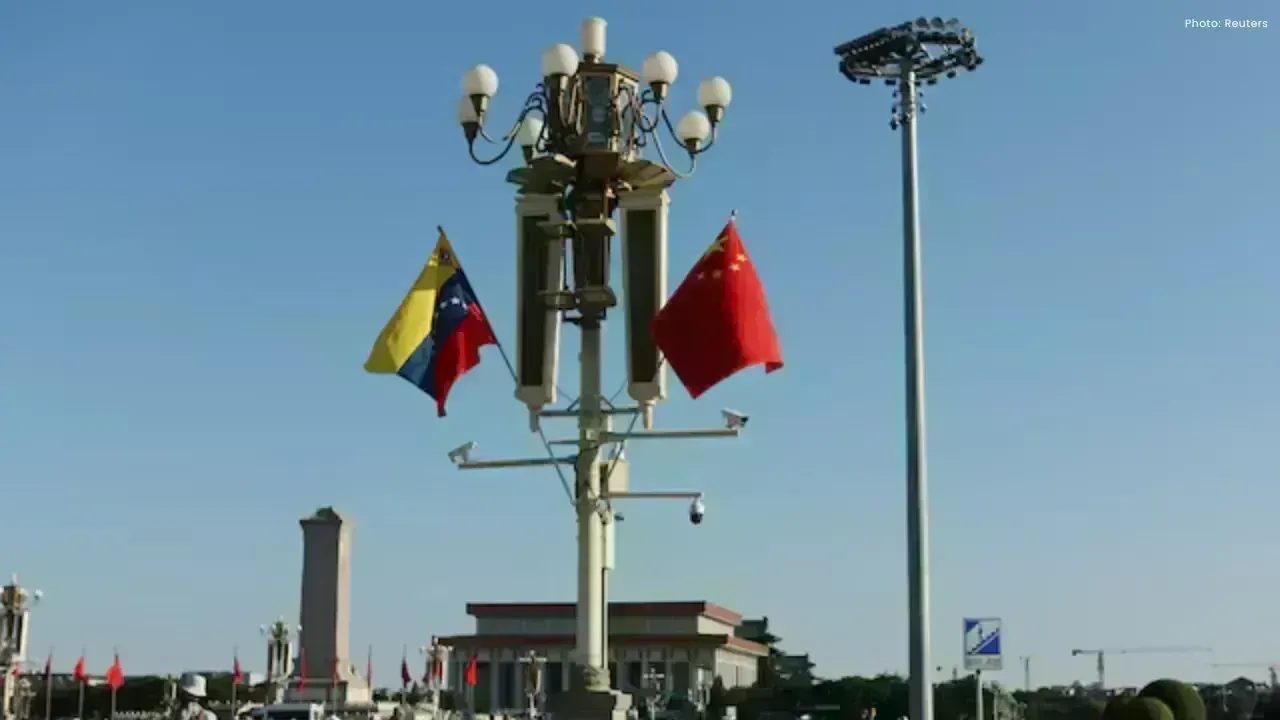
Venezuela's longstanding financial dependency on China has come back into focus following recent actions by the U.S. that have impacted how Venezuela manages its debt repayments. Central to this dilemma is oil, Venezuela's most precious resource and economic lifeblood. Clarifying Venezuela's monetary obligations to China, along with the integral role of oil, sheds light on the broader political and economic friction faced by the country.
Over the past twenty years, China has emerged as one of Venezuela's foremost financial backers. Research from AidData indicates that lenders associated with the Chinese government have provided approximately 106 billion dollars in loans to Venezuela from 2000 to 2018. These financial arrangements were predominantly made during periods of high oil prices when Venezuela was viewed as a formidable energy contributor. Nonetheless, following years of economic turmoil, mismanagement, and declining oil output, Venezuela officially defaulted on its obligations in 2017.
Since then, determining the precise amount Venezuela owes China has proven challenging. The lack of transparent debt figures from Venezuela has led to widely varying estimates. AidData and investment bank Societe Generale suggest the outstanding debt is around 10 billion dollars, while JP Morgan estimates it to be somewhat higher, between 13 and 15 billion dollars. What remains certain is that China stands as Venezuela's largest individual creditor.
A significant aspect of this relationship is the nature of the loans, many of which are 'oil-backed.' This implies that rather than repaying China directly in cash, Venezuela agreed to compensate primarily through the delivery of crude oil and other fuels. These arrangements typically involved the China Development Bank along with Venezuela's state-owned oil company, PDVSA. Despite suspending payments to numerous other creditors due to sanctions and defaults, oil shipments to China have persisted.
As part of these agreements, Venezuela has been sending oil cargoes to China, with proceeds from these sales deposited into accounts under Chinese control. These funds are then utilized for interest payments, and potentially some principal repayments. According to PDVSA officials, China instituted a grace period starting in 2019, allowing Venezuela to defer repayment of the principal amount while continuing to channel debt repayments through oil deliveries.
The ambiguous nature of the available data adds to the confusion for international observers. Venezuela has not disclosed complete debt statistics for many years, with the central bank last sharing partial data in 2019. Furthermore, the International Monetary Fund has not conducted a comprehensive review of Venezuela's economy since 2004, forcing analysts to rely on oil export statistics, internal documents, and public statements for insights.
Recent U.S. actions have introduced additional uncertainty into the equation. Washington has exerted control over revenue from Venezuelan oil shipments, asserting that these funds will be held in a foreign account managed by the U.S. For China to receive any repayment, there would need to be a transfer of part of these funds to Beijing, although U.S. officials have suggested this is unlikely amid prevailing political tensions.
China's interests in Venezuela extend beyond mere debt recovery. The Chinese state oil giant, CNPC, maintains joint ventures with PDVSA, including one operation that produces upwards of 100,000 barrels of oil each day. The ramifications of these ventures under U.S. oversight remain uncertain.
Ultimately, Venezuela's debt situation with China illustrates the intricate links between oil, geopolitical dynamics, and finance in global relations. Oil enabled Venezuela to secure vast loans in the past and has become the primary means of repaying China following its default. However, with U.S. involvement reshaping oil distribution, the future of this repayment framework hangs in the balance, with implications extending beyond Venezuela and China, influencing the global energy landscape.


 English