Post by : Bianca
Haleem
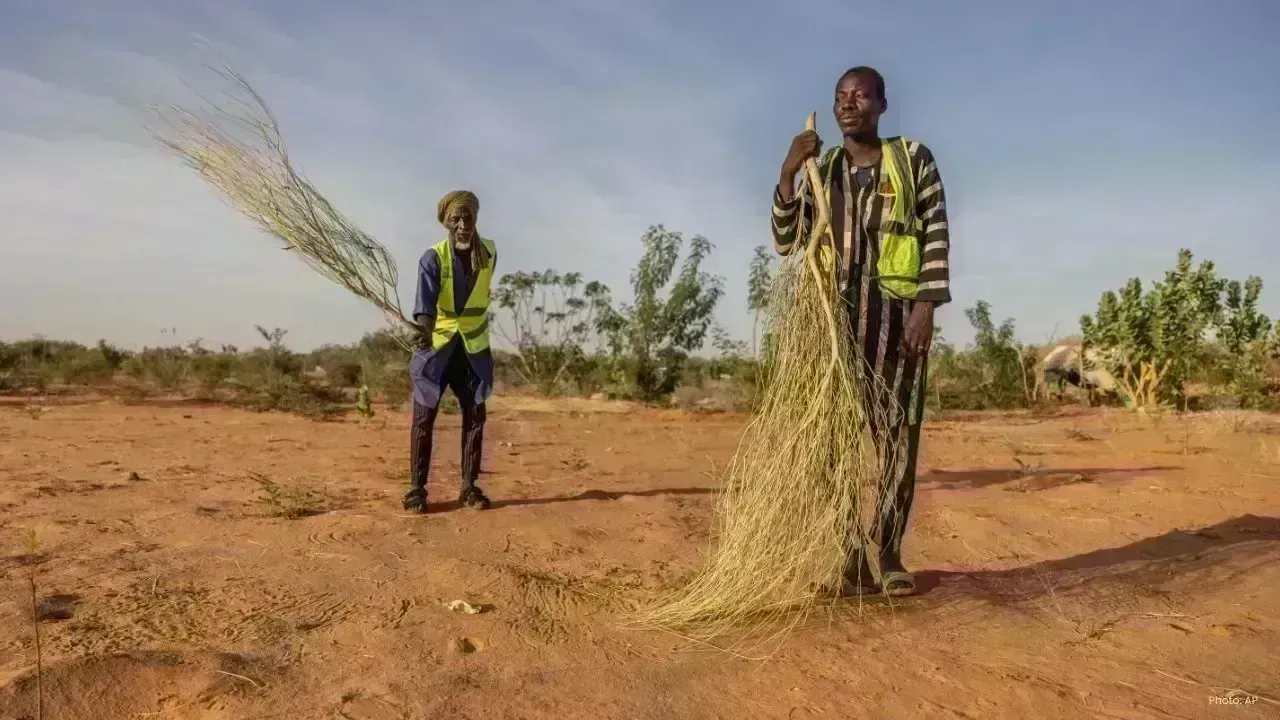
As the day fades over the arid Mauritian landscape, a group of dedicated individuals stand united. Their coordinated movements create a rhythmic sound as they strike the dusty ground with slender branches. Although there are no flames today, this volunteer brigade persists in their training, fully aware that bushfires can ignite unexpectedly.
These courageous young men are refugees from Mali, receiving support from the United Nations High Commissioner for Refugees (UNHCR). They collaborate closely with local Mauritanians to safeguard the resources that sustain them all. Their mission, while straightforward, is fraught with peril—preventing fires that could devastate homes, livestock, and crops.
Fires in a Challenging Climate
Situated in West Africa, Mauritania is largely enveloped by the Sahara Desert. With minimal rainfall and scarce vegetation, bushfires can ignite in an instant and may burn for an extended period. These blazes threaten to decimate the limited grass and trees vital for both human and animal survival.
Currently, over 250,000 Malian refugees reside in Mauritania, sharing grazing lands with local herders. A single blaze can lead to the loss of food sources for numerous livestock, sparking hunger and conflict.
A Legacy of Service
Younger volunteer Hantam Ag Ahmedou, who fled violence in Mali at the age of 11, recalls the rapid spread of bushfires and the helplessness of those around him. In honor of the kindness shown by Mauritanians during their settlement, his father helped establish a volunteer firefighting unit comprising refugees. While Mauritanians brought valuable knowledge to the group, the Malians contributed their expertise in extinguishing fires using branches rather than water.
Ag Ahmedou states that relying on water is impractical as fires often break out far from any water source. Instead, they use branches, predominantly from acacia trees, to suffocate the flames.
A Flourishing Firefighting Effort
Since receiving formal support from UNHCR in 2018, the brigade has expanded with funding from the European Union to cover training, equipment, and the establishment of firebreaks—clearings that help stop fire spread.
Today, the firefighting unit boasts over 360 refugees, actively working alongside local authorities and firefighters. When fires erupt, teams quickly jump into action, with a crew of 20 directly battling the flames while others are on standby to take over as needed.
Having started out at 13 by bringing food and water to the team, Ag Ahmedou faced his first fire at the age of 18 and has since battled countless blazes. Aware of the risks, he believes their vigilance is crucial.
“If we fail,” he warns, “the flames could reach the refugee camps or local villages, threatening lives and livelihoods.”
Escalating Climate Risks
Climate change exacerbates heat, drought, and desertification in Mauritania. With reduced rainfall and increased dryness, fires erupt swiftly and linger longer.
UNHCR officials indicate that even local herders are struggling to feed their livestock. As resources dwindle, competition arises between refugees and locals for grass and water, occasionally leading to tensions.
The Mbera camp alone houses over 150,000 refugees, with many more living in surrounding villages. In some locales, refugees outnumber locals by tenfold, making cooperation essential to mitigate conflicts.
Restoring the Environment
These firefighter refugees aim to do more than extinguish flames; they are also aiding ecological recovery. Volunteers like Abderrahmane Maiga engage in tree planting, focusing on acacias that endure heat, as well as cultivating lemon and mango trees.
Through reforestation efforts, they help enrich the soil, provide shade, and combat desertification. Maiga emphasizes the significance of this initiative, reflecting that their community has supported them, and now they wish to give back.
Maiga recalls a severe fire in 2014, during which many fought tirelessly for nearly two days, collapsing from exhaustion but ultimately saving homes and livestock.
Enduring Challenges
With ongoing violence in Mali, most refugees find returning home impossible. They have established lives in the harsh Mauritian desert, accepting the difficulties it brings. Ag Ahmedou notes that he was born into a world characterized by sand, drought, and scarcity. He expresses that leaving for Europe is not a dream; instead, he believes their survival hinges upon resilience, solidarity, and hope.
“We must fight,” he stresses. “We have to safeguard our home and the people who have welcomed us.”
The refugee firefighters in Mauritania exemplify bravery and community spirit. They risk their lives to stave off fires, protect livestock, and foster harmony. With backing from the UN and the EU, they train, prepare, and rejuvenate the land they rely on.
Their story illustrates how refugees can evolve from victims of hardship to custodians of their new environment. Amid climate change and resource scarcity, their commitment is indispensable.
They fight not only to save flora but also to preserve peace, uphold dignity, and construct a promising future in one of the world's harshest regions.


 English