Post by : Bianca
Haleem
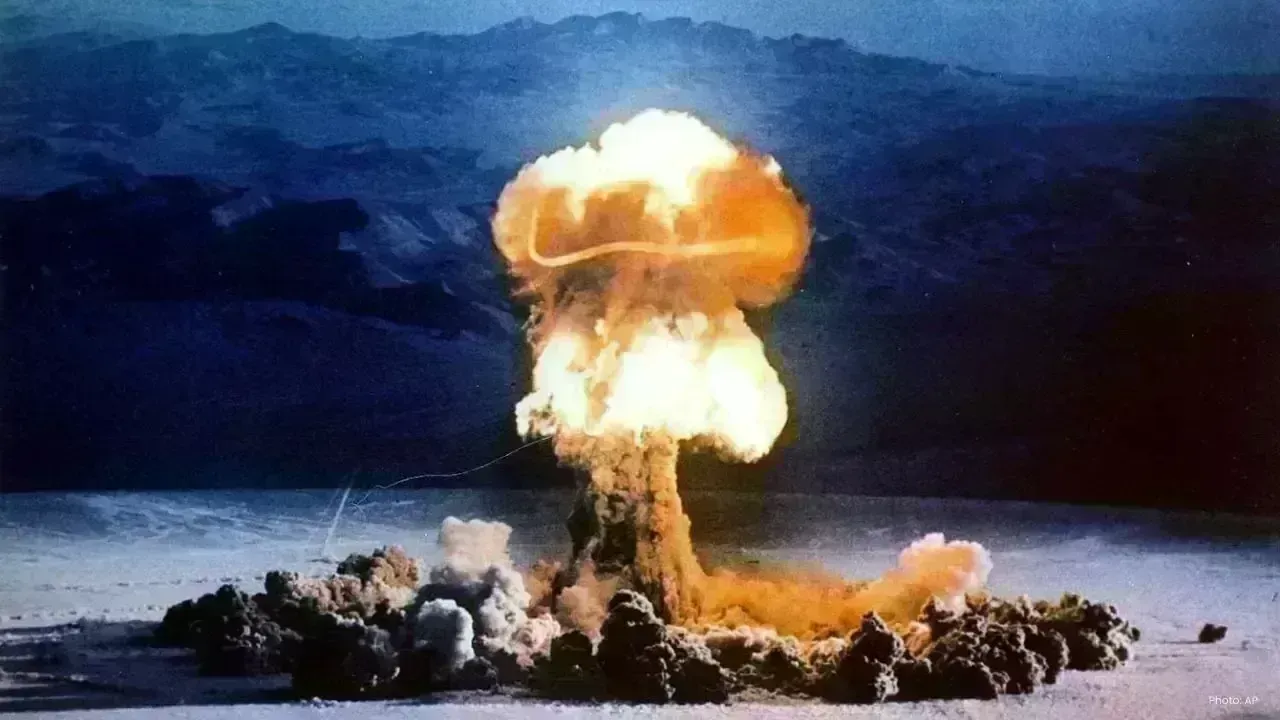
The United States has voiced support for the potential resumption of nuclear tests, citing worries over actions by Russia, China, and North Korea. This statement follows earlier suggestions by President Donald Trump regarding the need to restart nuclear testing to respond to similar operations by rival nations.
During a private session on November 10, Howard Solomon, U.S. Chargé d’Affaires to the International Organizations in Vienna, addressed attendees of the Preparatory Commission of the Comprehensive Nuclear-Test-Ban Treaty Organization (CTBTO). His comments only surfaced later through a report by The Associated Press.
Solomon indicated that the U.S. would prepare for nuclear tests comparable to those conducted by other nuclear-powered nations, ensuring transparency while safeguarding national security. He mentioned suspicions that Russia and China have breached their obligations to abstain from testing since the year 2019, particularly regarding zero-yield explosions.
Zero-yield tests involve minuscule explosions that compress nuclear material to induce a reaction, yet these are banned under the Comprehensive Nuclear-Test-Ban Treaty (CTBT). Any detectable explosion is considered a breach of the treaty’s provisions.
Rising Concerns Regarding Regional Players
Solomon referred to longstanding anxieties among U.S. officials about Russia and China's adherence to the ban on nuclear tests. He pointed to potential evidence of testing activities in Lop Nur located in China’s Xinjiang and in Russia’s Arctic test site at Novaya Zemlya. Although both countries signed the CTBT, they have not ratified it and assert compliance with a moratorium on testing, denying any misconduct.
Moreover, Solomon emphasized North Korea's history with nuclear tests, which includes six significant tests recognized by the CTBTO's monitoring network. Experts have expressed concerns that low-yield tests occurring underground may go undetected, which leads the U.S. to believe some nations may be conducting covert testing.
Trump's Assertions and U.S. Stance
Recently, President Trump alleged that Russia and China are performing nuclear tests without public admission, contrasting that with the U.S. practice of open policymaking. A White House spokesperson, when asked if Trump referred specifically to low-yield testing, mentioned that the President was advocating for U.S. capabilities to remain on par with its global counterparts.
While lacking further specifics, the official indicated that U.S. preparedness was necessary to avoid falling behind as testing activities escalate in other nations.
Russia Dismisses Allegations
Russia has responded vigorously to Solomon's statements, with Representative Mikhail Ulyanov cautioning that nuclear testing resumptions could undermine global security and erode the nuclear non-proliferation framework. He requested a detailed clarification from the U.S. about its testing intentions.
Ulyanov has rebuked the U.S. claims as “false” and “unacceptable,” asserting that Russia is maintaining its commitment to the moratorium.
Wider Concerns in Arms Control
In addition to testing, Solomon criticized Russia for various issues, including its suspension of adherence to the New START treaty, its extensive stockpile of nonstrategic nuclear weapons, and its nuclear policies.
Nonstrategic nuclear weapons, which are smaller and suitable for battlefield use, are not restricted by significant arms control agreements, complicating regulatory efforts. They still hold significant destructive potential and experts fear they could escalate conflicts owing to their battlefield suitability.
The Federation of American Scientists has raised alarms over the dangers posed by nonstrategic nuclear arsenals, believing they could be the first utilized in a conflict involving Russia and NATO.
Estimates suggest that Russia possesses between 1,000 and 2,000 nonstrategic nuclear warheads, contrasted with approximately 200 held by the U.S., creating considerable alarm among U.S. and NATO leaders.
Strategic Nuclear Weapons and New START
Strategic nuclear weapons are more potent options, designed for extensive strikes against enemy territories. Both the U.S. and Russia possess comparable numbers: 1,770 for the U.S. and 1,718 for Russia.
These figures are constrained by the New START treaty from 2010, which stands as the final major arms control pact between the two countries. Although Russia halted its participation in 2023, President Putin remarked that Russia would adhere to treaty limits for an additional year.
However, as the treaty nears expiration on February 5, both nations’ nuclear capabilities could operate without restrictions for the first time in decades.
A Critical Moment for Global Arms Control
The current s debate on nuclear testing encapsulates broader challenges in global arms control. The trust amongst principal nuclear powers is eroding, and pivotal treaties are under considerable strain. Renewed testing might heighten international instability and catalyze a new arms race.
The U.S. maintains that any testing revival would be a response to violations by other nations, which Russia and China refute. Meanwhile, North Korea’s ongoing weapons development adds another layer of unpredictability.
As global tensions intensify, experts caution that nuclear brinkmanship may resurface. The collapse of agreements like New START and disputes regarding CTBT compliance may compel nations to augment their arsenals once more.


 English